Teacher Induction Programme
Induction is a critical milestone in the professional journey of new educators. It is designed to offer support, guidance and orientation for early career teachers during their first couple of years in the teaching profession.
Recently Uploaded
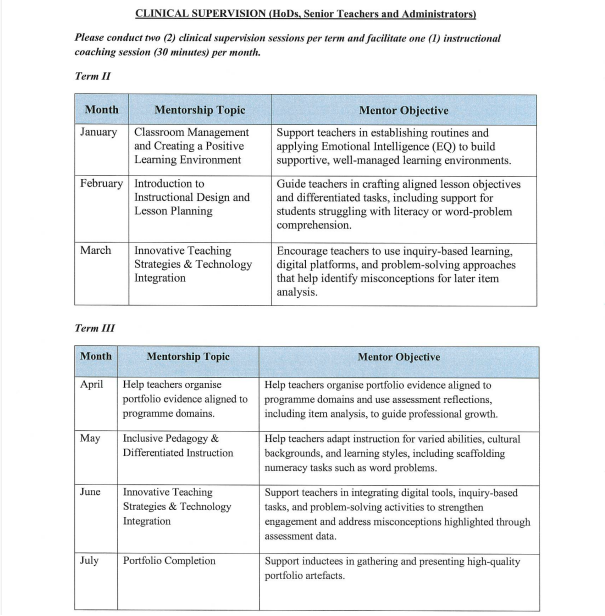
Mentorship
The mentoring relationship within teacher induction is one in which a more knowledgeable colleague (HoD/Senior Teacher/Vice Principal/Principal) supports the skill and knowledge development of an early career teacher. The mentor provides guidance and feedback to the early career teacher based on best practices, pedagogy and personal experiences (Moir, & Gless, 2001). Mentor teachers mediate the early demands of the profession by discussing with the early career teacher how the education and school system operates (Goldhaber, 2019). In doing so, mentors can shape the development of teachers, molding them to become educators who are well equipped to effectively support the development of 21st century skills and values, attitudes and behaviours, VABS, in our students.
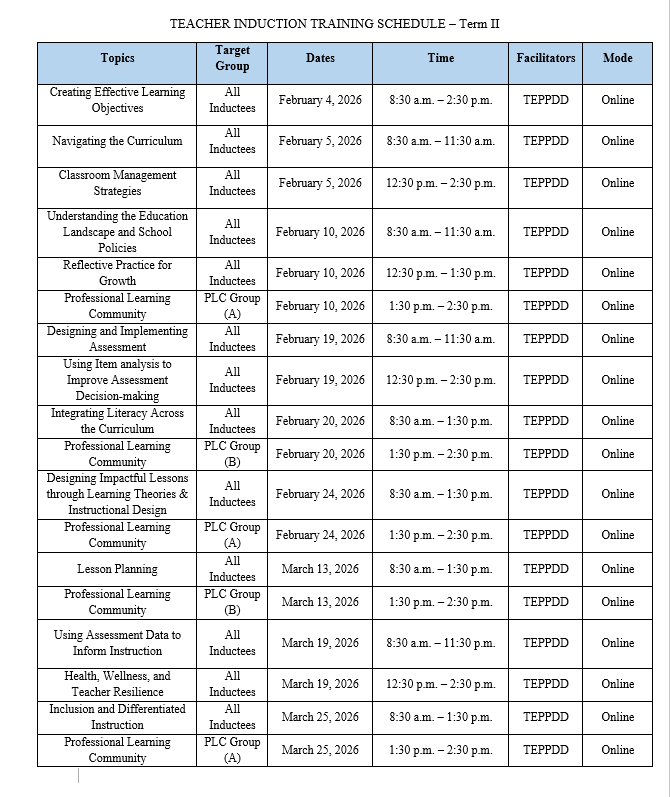
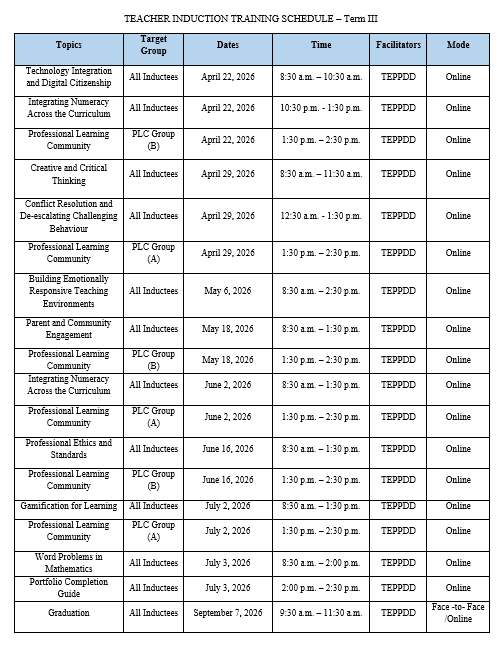
Professional Learning Communities (PLCs)
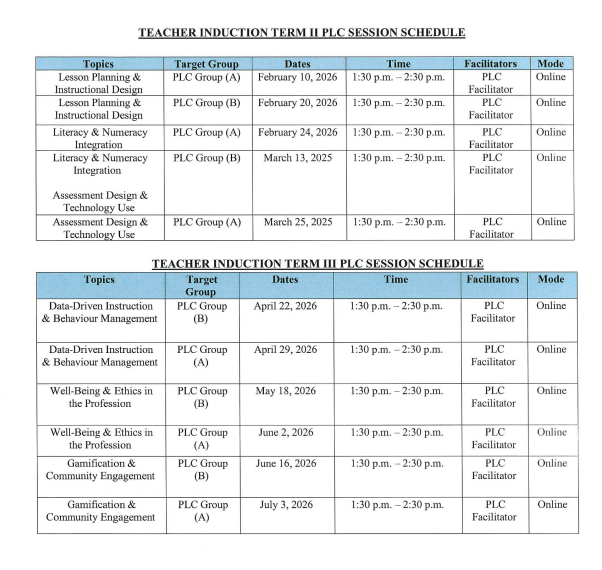
Induction Handbook
Portfolio
In this induction programme, the portfolio will be used as a space for teachers to compile and reflect on their practices. As they engage in learning throughout the year, early career teachers will develop artefacts that illustrate the ways in which they improved their practice. It is hoped that through the portfolio teachers will gain confidence in themselves as educators, and will be motivated to engage in continuous professional growth. Portfolios will thus serve as a powerful springboard for transformation into effective practitioners.
What's Included?
Tools You Can Use
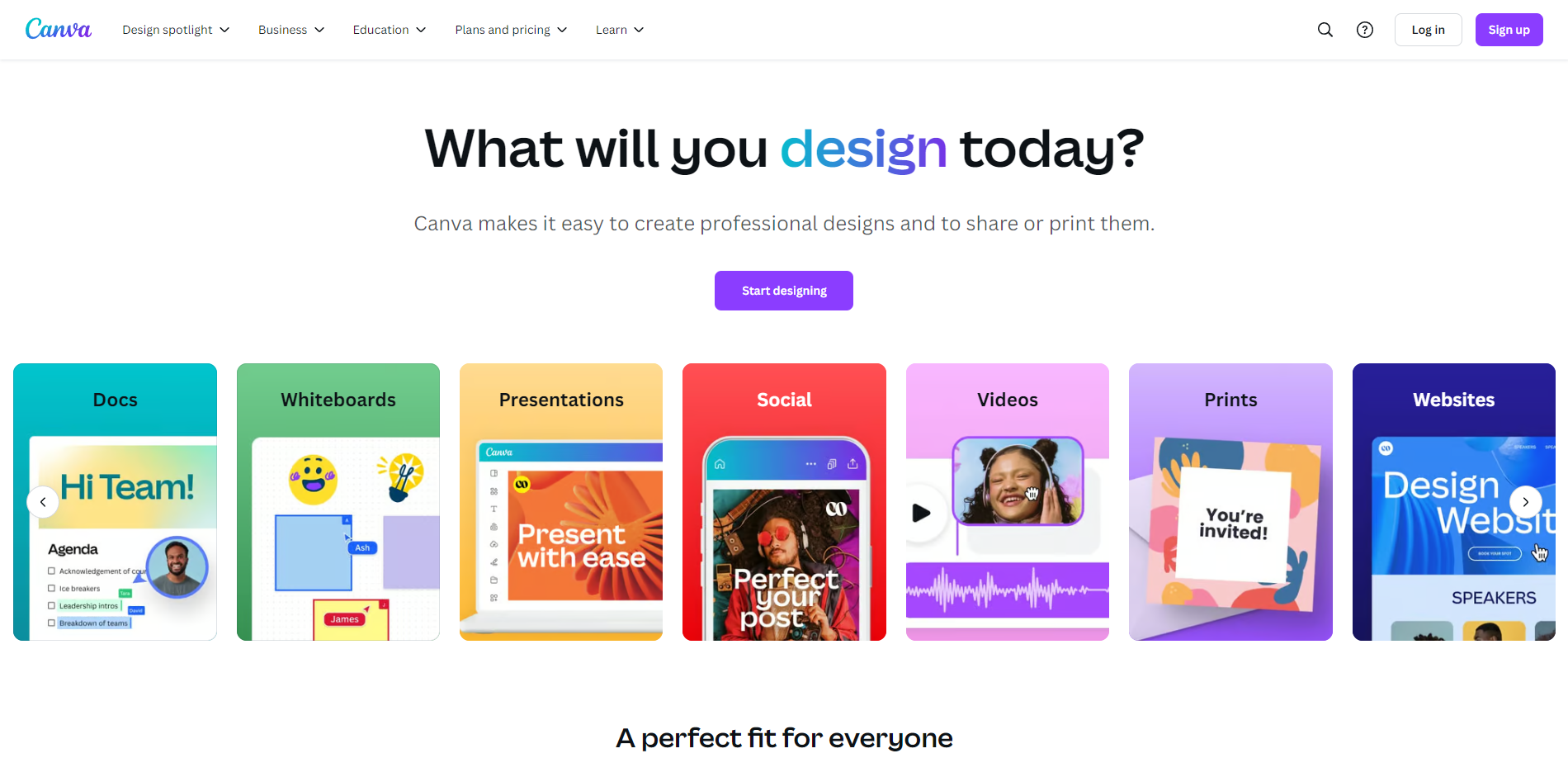
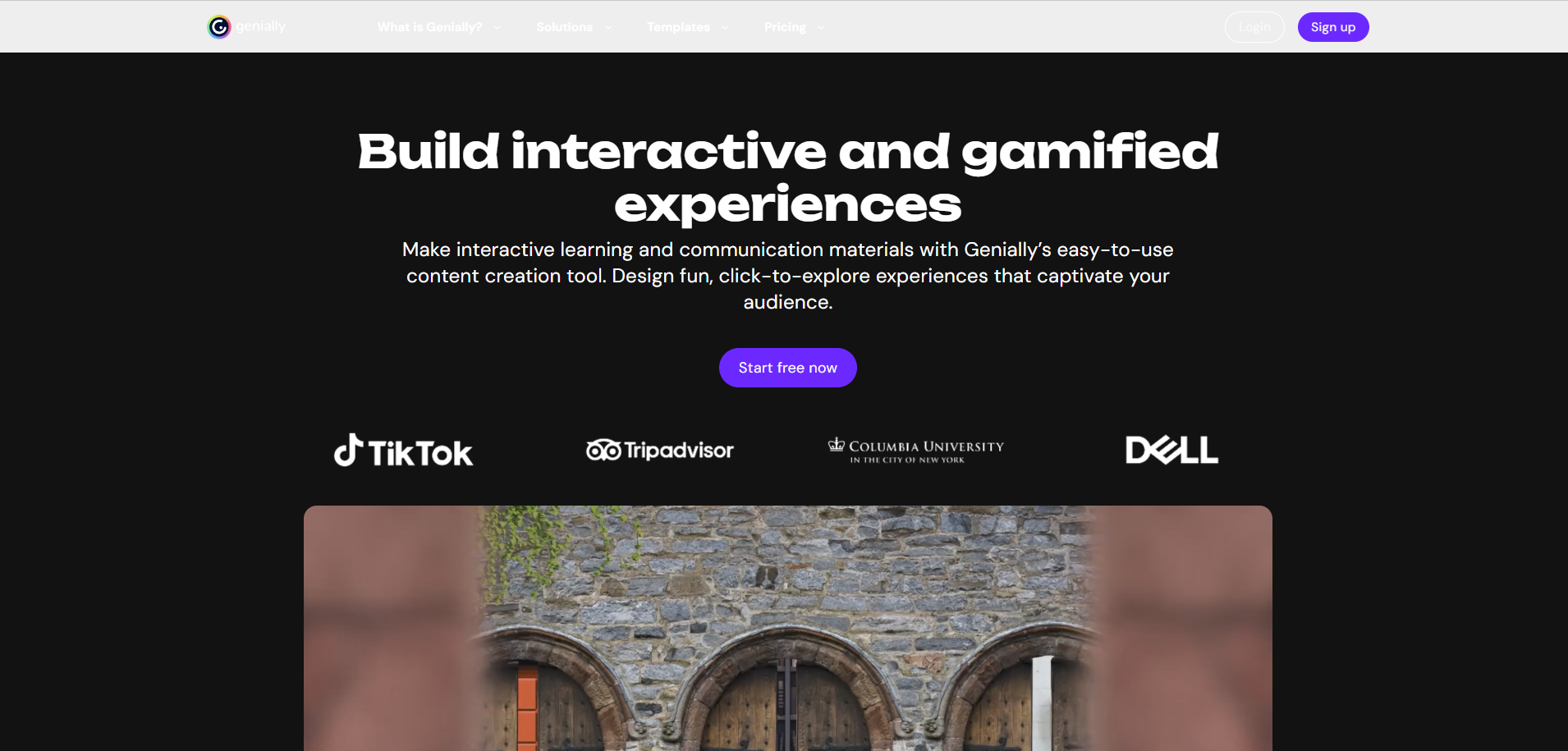
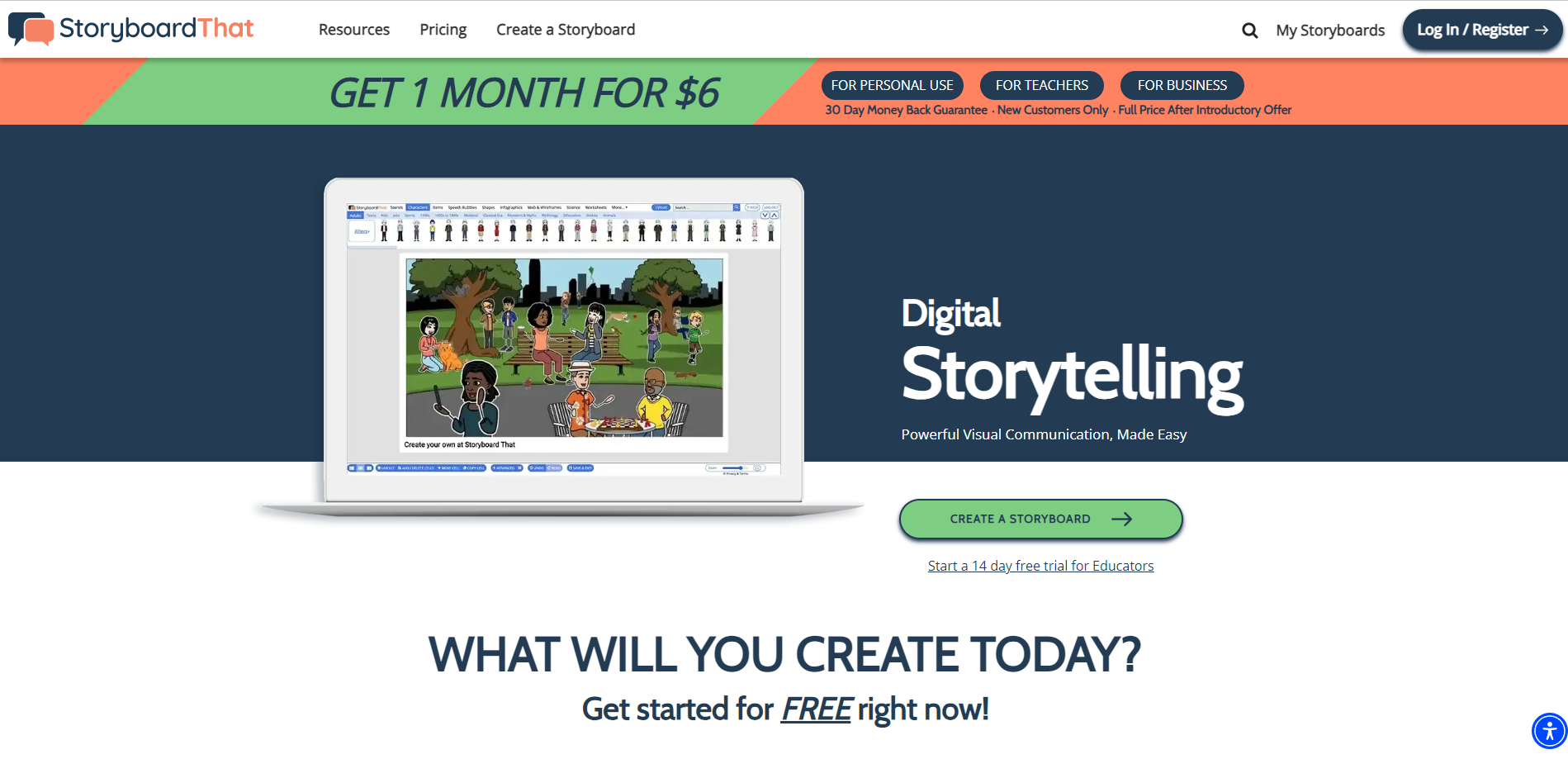


The Portfolio should be made up of (8) Reflective Journal entries and (10) Artefact entries.
Portfolio Items
Reflections
Reflective Journal Entries
-
Roles and Responsibilities – What does being a teacher mean in your school context, and how does emotional awareness support professional responsibilities?
-
Importance of Content Knowledge – Why is strong subject knowledge or curriculum knowledge important, including competence in mathematical problem-solving and word problems?
-
From Theory to Practice – How have training sessions influenced your approach to teaching, including the use of assessment data and item analysis to inform decisions?
-
Creating a Positive Learning Environment – How do you ensure your classroom is safe, supportive, welcoming, and emotionally responsive?
-
Managing the Classroom – What approaches help you guide behaviour, maintain routines, and address challenging situations effectively?
-
Assessment in Practice – How do assessments help you and your students improve teaching and learning, and how does simple item analysis deepen your understanding of student performance?
-
Addressing Challenges – How have you handled difficult situations or challenging behaviours, and what strategies supported your response?
-
Professional Growth and Goals – How have you grown during the induction, and what are your future goals as a teacher?
Artefacts
Artefact Entries
-
Professional Growth Goals – A written record of your personal teaching goals for the year and steps to achieve them.
-
Policies File – A small collection (paper or digital) of key school policies and guidelines that guide your teaching.
-
Literacy and/or Numeracy Strategies – Two examples of how you supported literacy and/or numeracy development in your classroom, including at least one instance of mathematical problem-solving using word problems (where applicable).
-
Learning Objectives – Submit Two learning objectives (one lower-order, one higher-order), each linked to a lesson plan with a brief explanation of curriculum alignment, assessment method, and impact on student learning.
-
Lesson Plan for Clinical Supervision – A full lesson plan that was observed by your supervisor, including feedback received.
-
ICT Integration with Gamification – Three examples of technology used in your teaching, with at least one gamified activity (e.g., Kahoot, Quizizz, or a class-based game).
-
Instructional Strategies – Two teaching strategies you used in practice, with brief notes on what worked well and what could be improved.
-
Assessment Evidence – A test, quiz, or project you conducted, with a short reflection on student results and learning outcomes.
-
Creative and Critical Thinking Activities – One activity that encouraged creativity and one that developed critical thinking in students.
-
Emotionally Responsive Practice Artefact – A brief reflection, classroom activity, or interaction that illustrates the application of Emotional Intelligence (EQ) in creating a supportive, relationship-centred learning environment.
Examples of Portfolios
These are some of the portfolios teachers from the 2022-2023 cycle of the Induction programme would have completed. The content will not be the same however, you can use them as design templates to help guide you on how to get started.
Resources
During the Induction Programme, a variety of resources will be posted on Microsoft Teams to support your learning. These resources will include training materials, recorded webinars and other useful links. In addition to these, you are encouraged to explore journals, articles, and other valuable information available from NALIS – National Library and Information System Authority
Click the buttons to access addition resources.
Mentors